Plus-Sizing Your Wheels Without Wrecking the Ride
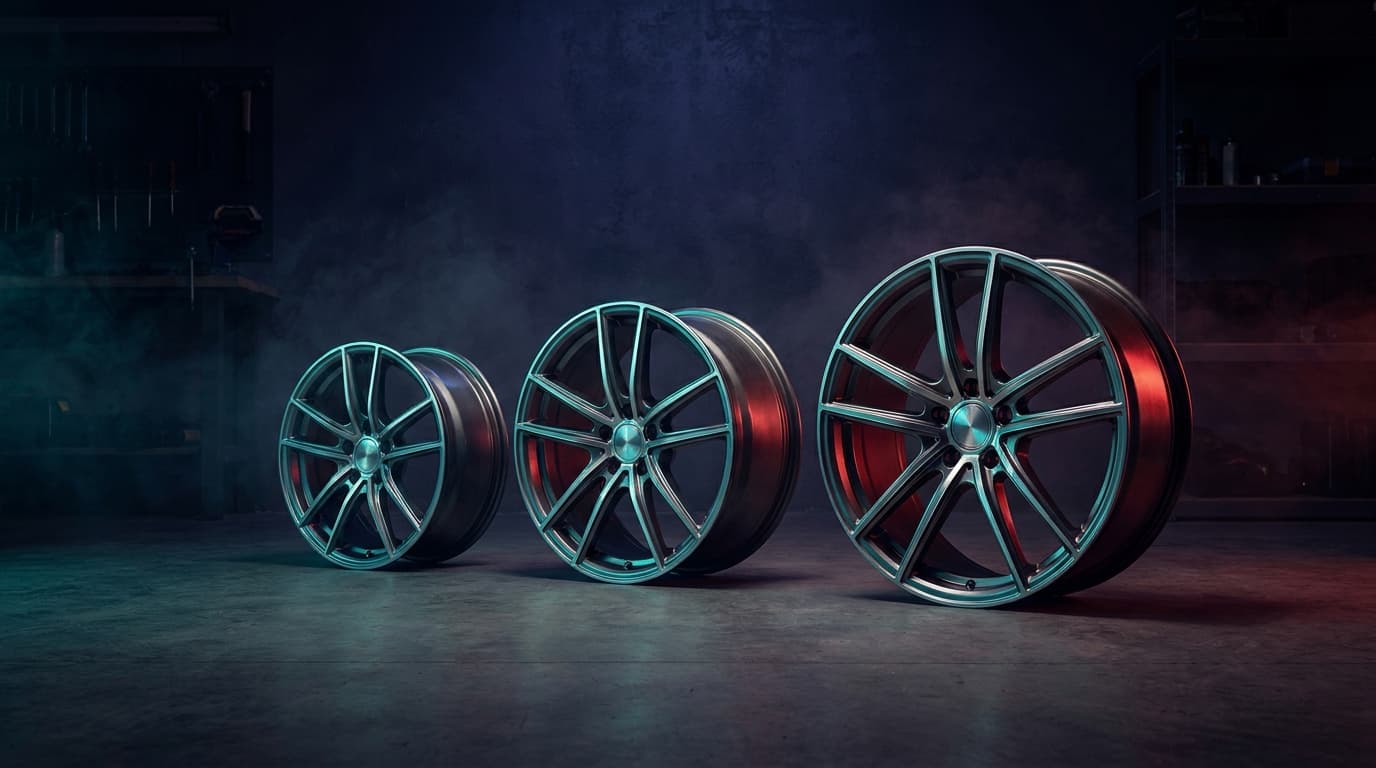
Going up an inch (or two) in wheel diameter is the single biggest visual upgrade you can make to a car. Do it wrong and you get a harsh ride, a speedometer that lies to you, and tires that rub. Do it right and the car looks factory-plus-better with none of the downsides. The trick has a name: plus-sizing.
The golden rule: keep the overall diameter the same
When you go up in wheel diameter, you go down in tire sidewall by the same amount, so the whole tire-and-wheel package stays the same overall height. This keeps your speedometer accurate, your gearing unchanged, and your fenders rub-free. A shorter sidewall on a bigger wheel — same total diameter.
A worked example
Say you run 225/45R17. To "plus-one" to 18-inch wheels, you drop the aspect ratio and nudge the width so the diameter matches — something like 245/40R18. The tire calculator does the math; the goal is to land within about 3% of the original overall diameter.
What you gain and what you give up
- Gain: sharper turn-in, a wider contact patch, and a much more aggressive stance.
- Give up: some ride comfort (less sidewall to absorb bumps) and a bit more vulnerability to pothole damage.
- Watch: heavier wheels can dull acceleration — lighter is almost always better.
Do not forget offset and bolt pattern
Diameter is only half the fitment story. The bolt pattern must match your hubs exactly, and the offset (how far the wheel sits in or out) has to keep the tire inside the fender and clear of the brakes and suspension. Every wheel we list shows its bolt pattern, offset, and centre bore — and if you tell us your car, we will confirm the fit before it ships.
Need a hand choosing?
Tell us your vehicle and we'll confirm the fit before it ships.