Steel vs. Alloy for Your Winter Wheel Set: The Honest Breakdown
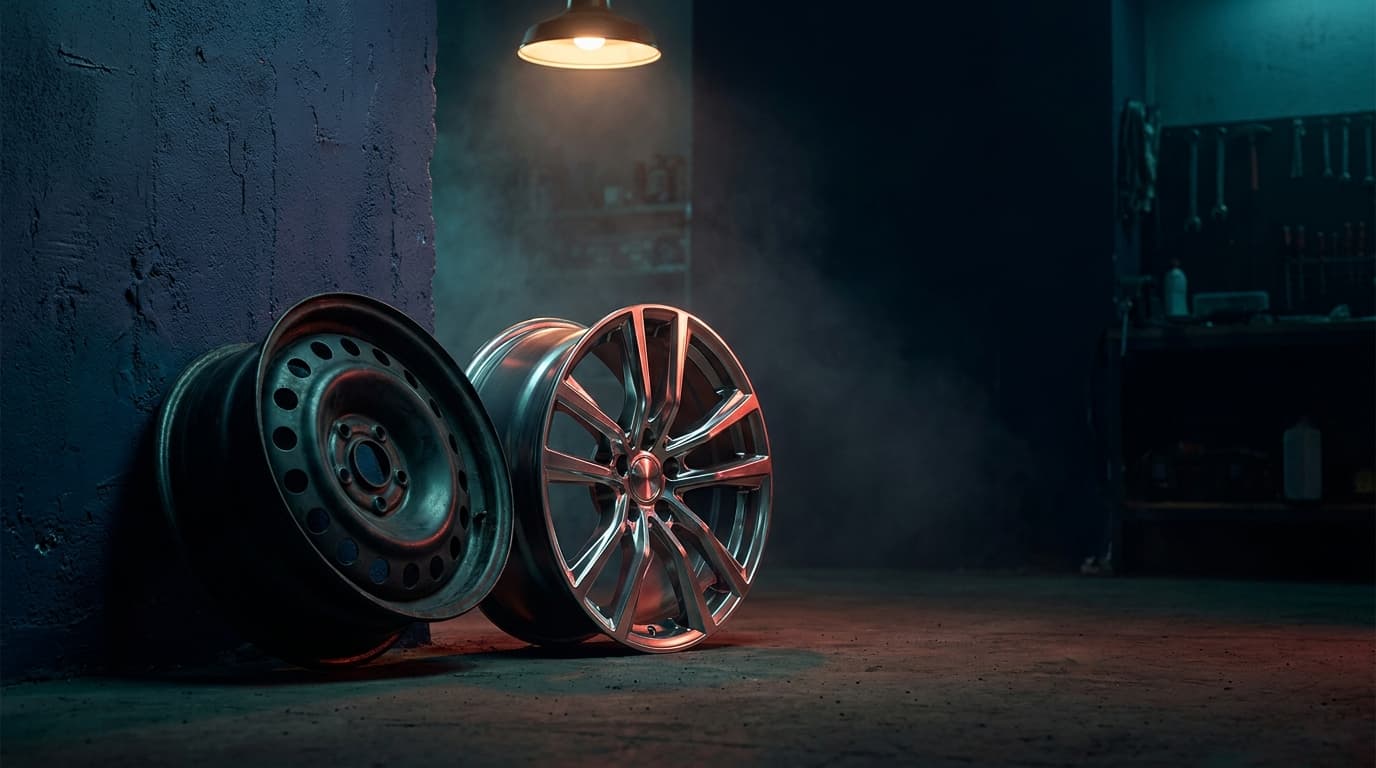
If you run winter tires, mounting them on a second set of wheels is one of the best money-saving moves you can make. You avoid paying to unmount and remount tires twice a year, your tires last longer, and your expensive summer rims never touch road salt. The only question left is: steel or alloy for that winter set?
The case for steel
Steel wheels are cheap, tough, and shrug off exactly the abuse winter throws at them — salt, slush, potholes, and curb strikes hidden under snowbanks. Bend one on a frozen pothole and it is inexpensive to replace. For most drivers, a plain steel set (often hidden under a hubcap) is the pragmatic, bomb-proof choice.
- Cheapest per wheel.
- Nearly indestructible — a curb strike dents, it does not crack.
- Heavier, which slightly dulls acceleration and steering feel.
The case for alloy
A budget alloy winter wheel costs a bit more but is noticeably lighter, which helps ride quality and fuel economy, and simply looks better all season. Modern winter-specific alloys are finished to resist salt corrosion. If you keep your car clean and hate the look of steelies, a winter alloy is a legitimate upgrade.
- Lighter — better ride, steering, and economy.
- Looks like a finished wheel, not a spare.
- A hard enough hit can crack rather than bend — though quality alloys are tougher than their reputation.
Our take
Drive rough rural or pothole-ridden roads? Go steel and never think about it again. Drive mostly clean city streets and care how the car looks in the driveway? A budget winter alloy is worth it. Either way, the win is having a second set at all — mounted, balanced, and ready to bolt on in twenty minutes. We stock both, in every common bolt pattern, and can build the whole package for you.
Need a hand choosing?
Tell us your vehicle and we'll confirm the fit before it ships.